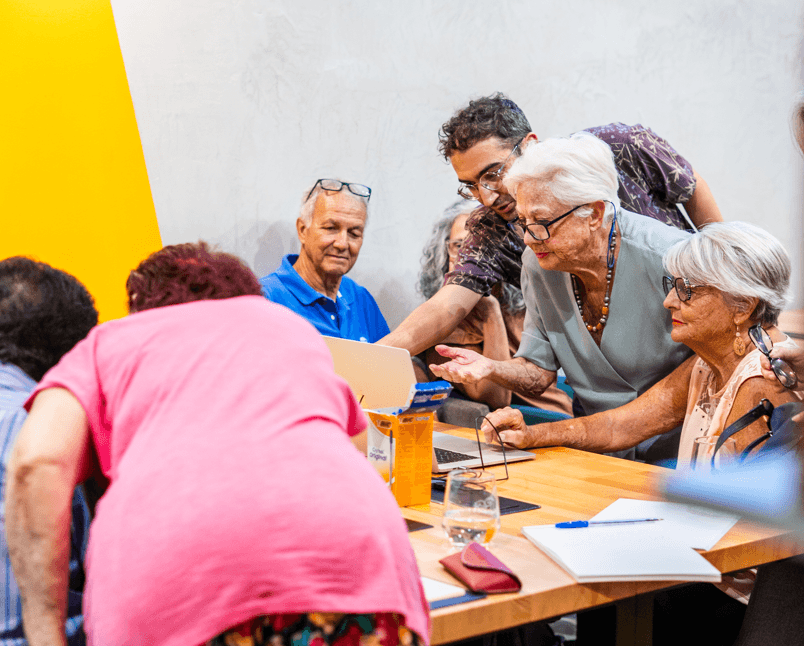
When we talk about video games and digital technologies, people aged 65 and over are rarely part of the collective imagination. Yet it is precisely from this awareness that the European project Active Ageing in the Digital Age was born: to explore how older adults relate to digital play and to understand which conditions make these experiences truly accessible, inclusive, and meaningful.
Between 2024 and 2025, partners from Italy, Latvia, and Lithuania involved people aged 65+, designers, digital creatives, and social and healthcare professionals in a participatory research process based on listening, experimentation, and direct observation. The results of this work are collected in the Final Research Report, available in full and accessible through the link provided in this article.
A people-centred approach
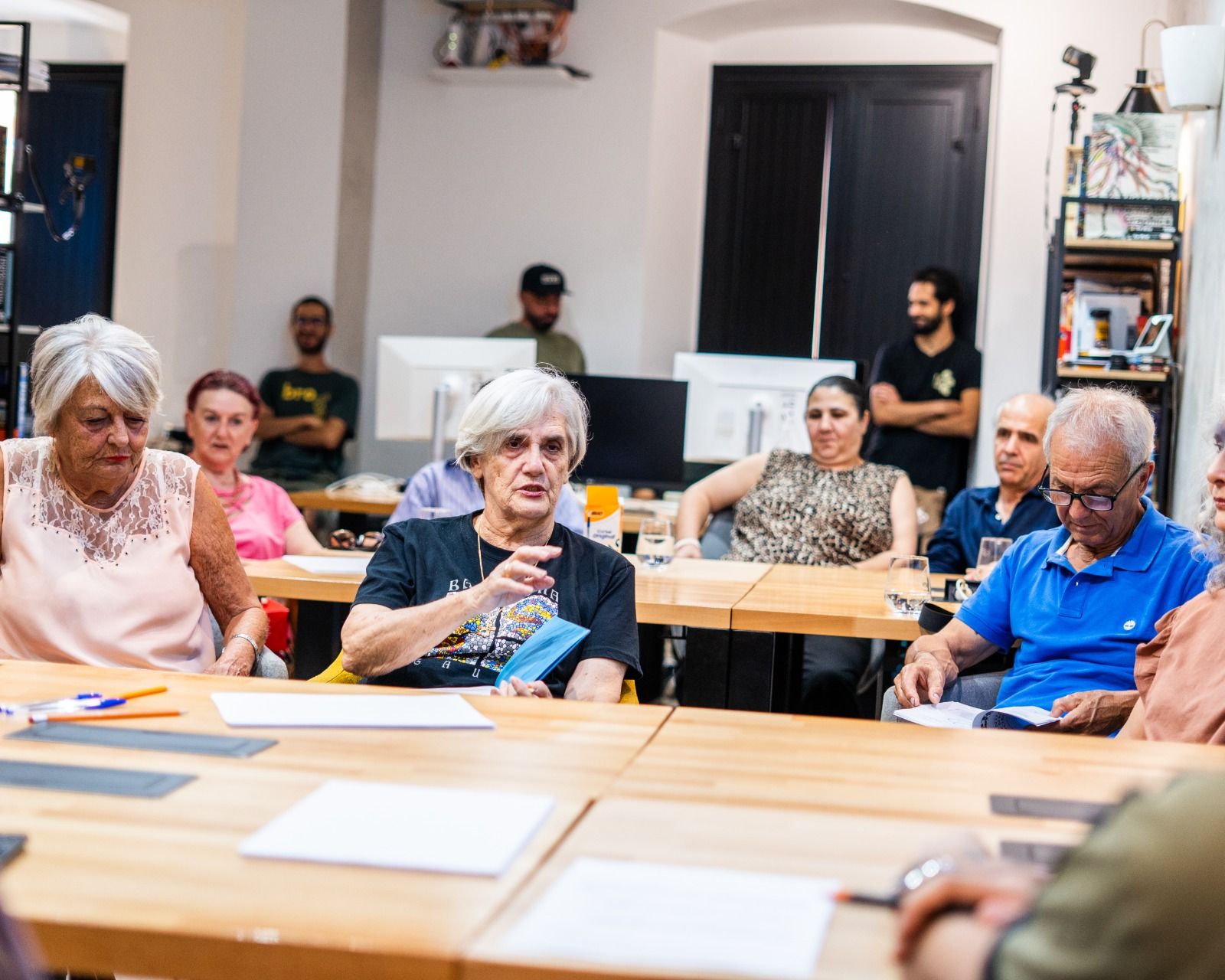
The research was designed following a qualitative, human-centred approach, with the aim of placing older adults’ real experiences at the core, rather than focusing on performance or technical skills. The process was structured around two main types of activities: focus groups and living labs. The focus groups provided a space for dialogue and exchange, where people aged 65+ could share their relationship with technology—often marked by curiosity, but also by fears and insecurities—while digital professionals were invited to critically reflect on their own design processes. In some cases, the discussions were complemented by initial gameplay experiences, useful for triggering spontaneous and concrete reactions. The living labs, instead, brought the research into the realm of direct experience. In real and protected settings, older adults tested cognitive games on computers and tablets, touch-based applications, and in some countries, virtual reality experiences. Facilitators and observers carefully followed each session, collecting data on usability, accessibility, emotional responses, social interactions, and motor or sensory difficulties.
Between curiosity and fear: the first encounter with technology
One of the clearest findings concerns the initial relationship with digital technologies. Many participants reported feeling intimidated, fearing they might make mistakes or “break something.” However, this sense of insecurity never erased their curiosity. When activities were introduced calmly, with clear explanations and human support, most participants were willing to engage. In several cases, an initially sceptical attitude evolved into active participation and, at times, genuine enthusiasm. This shift represents one of the strongest indicators of the transformative potential of well-designed digital experiences.
The real barriers: not age, but design
The research highlighted a key point: the main difficulties are not cognitive, but design-related. The most common issues involved complex mouse and controller use, text that was too small or lacked sufficient contrast, unclear or ambiguous icons, overloaded interfaces, and excessively fast-paced gameplay. With just a few repetitions and clear guidance, many participants showed rapid improvement. This demonstrates that age itself is not the limiting factor; rather, it is design that rarely accounts for the real needs of older adults.
Preferred games: pace, familiarity, and meaning
Across all three countries, a strong preference emerged for cognitive, logic, and memory-based games characterised by a slow pace and the absence of pressure. Games reminiscent of traditional ones—cards, puzzles, matching games—felt more familiar and reassuring. By contrast, games based on fast reflexes, continuous action, or intense competition tended to generate stress or disinterest. For a game to be accepted, it must stimulate the mind without overwhelming it and offer a clear sense of purpose, whether that is enjoyment, cognitive training, or social interaction.
The value of play as a social experience
One of the most significant findings relates to the relational dimension of play. Playing together, collaborating, commenting on actions, and helping one another significantly increased participant engagement and emotional well-being. In some contexts, particularly in residential care settings, play became a true catalyst for relationships, helping to reduce feelings of isolation. In these cases, digital tools did not replace social interaction; they facilitated it.
Emotions, confidence, and a sense of competence
The emotions observed during the living labs perhaps tell us more than any technical metric about the impact of these experiences. When gameplay was accessible and understandable, smiles, pride, a sense of competence, and improved mood were clearly visible. Conversely, confusing interfaces or difficult controls generated frustration, anxiety, and embarrassment. This confirms how essential it is to consider design not only as a functional matter, but as an emotional experience in its own right.
The professionals’ perspective: a growing awareness
The focus groups involving designers, digital creatives, and social and healthcare professionals led to an important reflection: people aged 65+ are often invisible in digital design processes. Engaging with the research findings strengthened awareness of the need to integrate accessibility from the earliest stages of design, emphasising familiar elements, clear language, and intuitive interactions. The idea of using artificial intelligence as a form of support also emerged—not to replace users, but to guide them, adapt difficulty levels, and reduce anxiety related to making mistakes.
Why these results matter
The research demonstrates that active ageing in the digital era is not only possible, but can generate tangible benefits in terms of inclusion, learning, and well-being. Older adults do not reject technology; they are often excluded because it is designed without them in mind. When the environment is welcoming, the design accessible, and the experience meaningful, digital play can become a powerful tool for participation, connection, and personal growth.
The next phases of the project
This research represents a crucial milestone, but not the conclusion, of the Active Ageing in the Digital Age project. The findings will now guide the next planned activities. In 2026, an International Forum on Active Ageing will take place in Lithuania, bringing together researchers, practitioners, designers, and decision-makers to discuss the research results alongside international experiences and best practices. Subsequently, the project will move into a more experimental phase with an International Hackathon in Latvia, where designers, developers, and creatives will work on concepts and digital prototypes inspired by the needs that emerged from working directly with people aged 65+.
Staying connected to the project means following the evolution of a process in which research, design, and experimentation continuously inform one another. Designing for all ages is not only a technical challenge, but a cultural choice. Listening to those who are too often left at the margins of the digital world is the first step toward building a truly inclusive future.
Want to learn more? Download the final research report at this link .
This project is developed and delivered in collaboration with:

“Active Ageing in the Digital Era” is co-funded by the European Union through the Erasmus+ programme.

Project Code: 2024-2-IT02-KA210-ADU-000269089 – Small-Scale Partnerships in Adult Education
Project Gallery:
.jpg)
.jpg)
.jpg)